Paid Acquisition and Measurement
Google Is Giving Advertisers a Better View Into What AI Actually Did
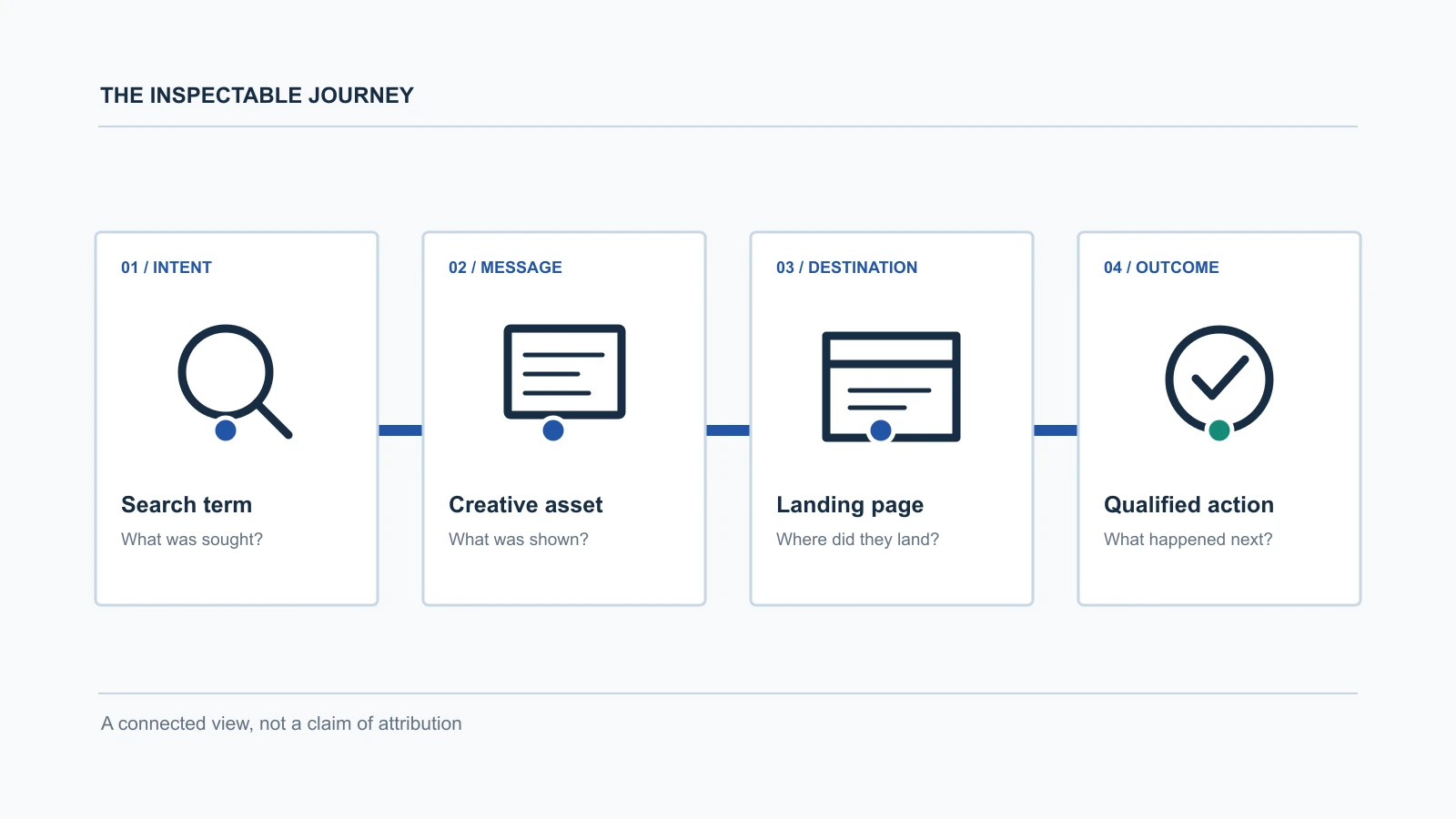
Google's announced AI Max report would connect search terms, creative assets, and landing pages. That visibility matters because AI advertising needs evidence, not merely automation.
AI can make advertising more adaptive. It can also make it harder to understand why an outcome happened.
Google’s latest AI Max reporting update addresses that tension directly.
The company says a forthcoming report will show which search terms triggered an ad, which creative assets the user saw, and where that user landed on the website. Google is also expanding AI Brief, which lets advertisers guide AI Max with business, audience, and messaging context, into additional languages.
For campaign oversight, the reporting announcement matters more than the language expansion.
As ad systems automate targeting, matching, creative assembly, and delivery, marketers risk losing the chain of evidence between intent and outcome. A campaign may produce conversions while leaving the team unable to answer basic questions:
What was the person actually looking for? Which message did the platform show? Which page received the visit? Did the landing experience match the search intent? Is the system finding valuable demand or merely easier conversions?
Automation without that visibility can improve a metric while weakening organizational understanding.
Google’s proposed unified report will not solve attribution. It will not prove incrementality, isolate every channel interaction, or show whether the business would have received the outcome without the ad. Further details and availability will come later, so advertisers cannot yet assess the report in practice.
The evidence layer behind the campaign
AI advertising should reduce repetitive work while increasing the quality of decisions. The proposed report could help marketers inspect which terms, creative assets, and landing pages entered a customer’s journey. It could also give teams a shared account of what happened before they compare the visit with outcomes outside Google Ads.
The paid-media team can see whether AI Max is matching the right queries. The creative team can see which assets entered the journey. The website team can see which pages received the traffic. Growth leadership can compare that path with lead quality, conversion behavior, and business outcomes.
That is how advertising becomes part of a growth system rather than an isolated spend channel.
For organizations using AI Max, the new report should support four recurring reviews:
- Intent: Are the triggering search terms connected to problems the business actually solves?
- Message: Did the selected creative make an accurate promise?
- Destination: Did the landing page continue the same argument and offer a credible next action?
- Outcome: Did the visit produce useful commercial movement—not merely a platform conversion?
The fourth question still depends on data outside Google Ads. CRM state, sales qualification, revenue, retention, and downstream customer value cannot be inferred reliably from ad-platform reporting alone.
This is why website, analytics, paid acquisition, and follow-up cannot operate as separate conversations. AI can optimize within the boundaries it sees. Leaders are responsible for connecting those boundaries to the rest of the business.
Google describes the feature as a way to understand customer interaction and validate AI Max’s strategic value. Advertisers should use it to test that value rather than assume it.
Advertisers can give the system useful context while testing its decisions against the available evidence. The measure is the quality of the commercial outcome, not the sophistication of the automation.
Source
- Google’s AI Max reporting announcement, September 23, 2026.